


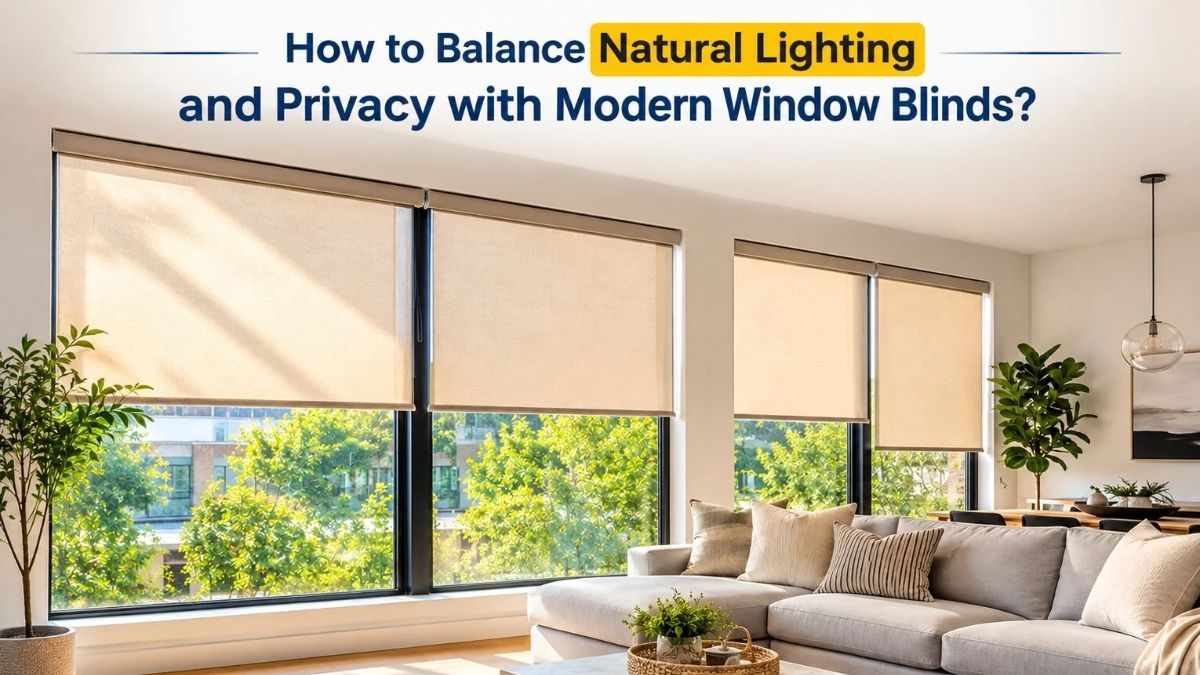
Natural light plays an important role in making indoor spaces feel comfortable, bright, and welcoming. However, too much sunlight can cause glare, increase indoor temperatures, and affect privacy. Modern window blinds offer a practical way to manage these concerns without completely blocking daylight. They allow homeowners and businesses to adjust the amount of sunlight entering a room according to their needs.
Choosing suitable blinds requires considering window size, room usage, fabric type, and the level of privacy required. Whether you are decorating a home, upgrading an office, or improving a commercial space, the right window covering can make a noticeable difference. Visiting a reliable Blind Shop in Jaipur can help you explore different materials, designs, and operating options for your windows.
1. Understand the Relationship Between Natural Light and Privacy
Natural lighting improves the appearance of interiors and reduces the need for artificial lighting during the day. Sunlight can make rooms feel more spacious and create a pleasant indoor environment. However, windows that allow unrestricted visibility from outside may compromise personal privacy.
The challenge is to maintain sufficient daylight while limiting unwanted visibility. Modern blinds provide flexibility by allowing users to adjust their position, angle, and coverage.
For example, partially opening horizontal blinds can allow sunlight to enter while reducing direct visibility from outside. Similarly, fabric blinds can filter harsh sunlight and create a softer atmosphere.
2. Choose the Right Type of Window Blinds
Different types of blinds offer different levels of light control and privacy. Understanding their features makes it easier to select a suitable option.
Roller Blinds
Roller blinds are a popular choice because of their simple design and easy operation. They are available in different fabrics, including light-filtering, sunscreen, and blackout materials.
Light-filtering roller blinds reduce glare while allowing diffused daylight into the room. Blackout options provide greater privacy and block most incoming light, making them suitable for bedrooms and media rooms.
Venetian Blinds
Venetian blinds feature horizontal slats that can be tilted to control sunlight and visibility. Their adjustable design allows users to direct daylight towards the ceiling or floor without completely exposing the interior.
They are suitable for living rooms, offices, and study areas where flexible lighting is important.
Vertical Blinds
Vertical blinds are designed for large windows and sliding glass doors. Their vertical panels can be rotated to regulate sunlight and privacy.
They are particularly useful in offices, conference rooms, and commercial spaces with wide glass windows.
Zebra Blinds
Zebra blinds use alternating transparent and opaque fabric sections. By adjusting the layers, users can switch between filtered daylight and greater privacy.
Their contemporary appearance makes them suitable for modern residential and commercial interiors.
3. Consider Fabric Transparency and Material
The fabric used in window blinds directly affects how much light enters a room and how much privacy it provides.
Light-filtering fabrics allow natural light to pass through while reducing harsh brightness. These materials are useful in living rooms and common areas where maintaining daylight is important.
Sunscreen fabrics help reduce glare and limit direct sunlight while preserving some outside visibility during suitable daylight conditions. However, they generally provide less privacy at night when interior lights are switched on.
Blackout fabrics block most incoming light and offer greater privacy. They are suitable for bedrooms, meeting rooms, and spaces where light control is a priority.
When selecting Office Blinds, consider fabric performance, screen visibility, glare reduction, and ease of operation. The right material can improve the working environment while maintaining a professional interior appearance.
4. Match Blinds with the Purpose of Each Room
Every room has different lighting and privacy requirements. Selecting the same type of blinds for the entire property may not provide the best results.
Living Room: Living rooms generally benefit from natural daylight. Light-filtering roller blinds or Venetian blinds can help maintain brightness while reducing direct sunlight.
Bedroom: Bedrooms require greater privacy and better light control. Blackout roller blinds or layered window coverings can help create a comfortable sleeping environment.
Kitchen: Kitchen windows often need practical and easy-to-clean coverings. Moisture-resistant materials are worth considering, depending on the location and ventilation.
Home Office: Home offices require controlled lighting to reduce screen glare. Adjustable blinds can help maintain comfortable working conditions throughout the day.
Conference Rooms: Offices with presentation screens may require blinds that reduce external light during meetings. Vertical or blackout blinds can be useful in these spaces.
5. Use Light-Filtering Blinds to Reduce Glare
Direct sunlight can create uncomfortable glare on television screens, computer monitors, and other reflective surfaces. It can also make certain areas of a room difficult to use during bright hours.
Light-filtering blinds help distribute incoming sunlight more evenly. Instead of completely darkening the room, they soften the brightness and create a balanced indoor atmosphere.
Sunscreen roller blinds are another option for spaces exposed to strong sunlight. Their specially designed fabric helps reduce glare while maintaining a connection with the outside environment.
Selecting the correct opacity level is important because different fabrics offer different levels of light transmission and visibility.
6. Combine Blinds with Curtains for Better Flexibility
Using blinds and curtains together can provide additional control over natural light and privacy. Blinds can manage everyday sunlight, while curtains offer extra coverage when complete privacy or darkness is required.
For example, light-filtering roller blinds can be installed behind decorative curtains in a living room. During the day, the blinds can remain partially lowered to soften sunlight. In the evening, curtains can be closed for additional privacy.
Homeowners looking for coordinated window treatments can explore options at a reliable Curtains Shop in Jaipur. Choosing complementary colours, fabrics, and textures can improve the overall appearance of the interior.
Layered window coverings are particularly useful for bedrooms, large living areas, and properties with windows facing busy streets.
7. Consider Window Direction and Sunlight Exposure
The direction in which a window faces affects the amount and intensity of sunlight entering a room.
East-facing windows receive direct morning sunlight, while west-facing windows can experience stronger afternoon heat and brightness. South-facing and north-facing windows have different daylight patterns depending on the location and surrounding buildings.
Understanding these conditions helps in selecting suitable blinds.
- East-facing windows: Light-filtering blinds can reduce morning glare.
- West-facing windows: Sunscreen or blackout fabrics can help manage intense afternoon sunlight.
- South-facing windows: Adjustable blinds can provide flexible control throughout the day.
- North-facing windows: Lighter fabrics can help preserve available natural daylight.
These considerations are especially useful when selecting blinds for properties with multiple large windows.
8. Select Colours That Complement Interior Design
The colour of window blinds influences the overall appearance of a room. Neutral shades such as white, beige, grey, and cream work well with many interior styles.
Light-coloured blinds can create a clean and spacious appearance, while darker shades may provide a stronger visual contrast.
The selected colour should complement wall paint, flooring, furniture, and other decorative elements. For professional environments, simple and coordinated colours often create a more organised appearance.
Apart from aesthetics, fabric quality and functionality should remain important considerations during selection.
9. Focus on Easy Operation and Maintenance
Modern window blinds are available with manual and motorised operating systems. Manual blinds are generally straightforward to operate, while motorised options allow users to adjust window coverings through remote controls or compatible automation systems.
Motorised blinds can be useful for large windows, high ceilings, and commercial spaces where frequent adjustments are required.
Regular maintenance also helps preserve their appearance and functionality. Dust should be removed using a soft cloth, feather duster, or vacuum cleaner with a suitable attachment. Fabric blinds should be cleaned according to the manufacturer's instructions.
Proper installation and occasional inspection of operating mechanisms can help maintain smooth performance over time.
10. Get Professional Guidance Before Installation
Selecting blinds involves more than choosing an attractive design. Accurate measurements, suitable mounting arrangements, fabric selection, and operating mechanisms all affect the final result.
Professional guidance can help identify suitable options based on window dimensions, sunlight exposure, privacy requirements, and interior design.
If you are comparing different styles, visiting an established Blind Shop in Jaipur can help you understand the differences between roller, Venetian, vertical, and zebra blinds. You can also explore coordinated curtains and other window treatment options.
Before installation, check the product dimensions, material quality, maintenance requirements, and warranty details to make a suitable long-term choice.
Conclusion
Balancing natural lighting and privacy requires selecting window coverings that match the purpose and conditions of each room. Modern blinds provide flexible solutions through adjustable slats, light-filtering fabrics, blackout materials, and different operating systems.
By considering fabric transparency, window direction, room requirements, and interior design, homeowners and businesses can create comfortable spaces without unnecessarily blocking natural daylight. Combining blinds with curtains can also provide additional flexibility and improve the appearance of interiors.
Frequently Asked Questions (FAQs)
1. Which window blinds are best for controlling natural light?
Roller, Venetian, and zebra blinds are useful for controlling natural light. The right option depends on the desired brightness, privacy, and room requirements.
2. Do window blinds provide complete privacy?
Blackout blinds and fully closed opaque blinds can provide a high level of privacy. However, some light-filtering and sunscreen fabrics may allow visibility under certain lighting conditions.
3. Are roller blinds suitable for office spaces?
Yes, roller blinds are suitable for offices because they offer simple operation, different fabric options, and effective glare control.
4. What are zebra blinds used for?
Zebra blinds are used to adjust daylight and privacy through alternating transparent and opaque fabric sections.
5. Can blinds and curtains be used together?
Yes, combining blinds with curtains provides flexible light control, additional privacy, and more decorative options.